An early molecular signal is not yet evidence of functional benefit.
Search and category filters cover the evergreen explainers below. The eleven standalone updates are listed separately above; they are not included in these search results.
Base editors change DNA chemistry within a targeting window; prime editors copy a proposed edit from an RNA template. Their different strengths do not remove delivery or safety constraints.
A programmable DNA editor can change a cell. Turning that change into a treatment also requires a sound biological target, effective delivery and evidence that patients benefit.
Chemical marks help cells use the same DNA in different ways. That real biology does not make every exposure-associated mark a cause of disease, or every lifestyle claim a proven way to rewrite inheritance.
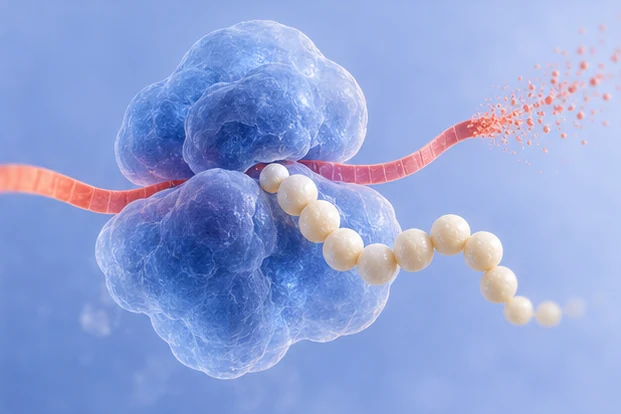
Messenger RNA gives cells a time-limited template for making a protein. The intended protein, delivery system and duration of expression determine what that temporary instruction can accomplish.
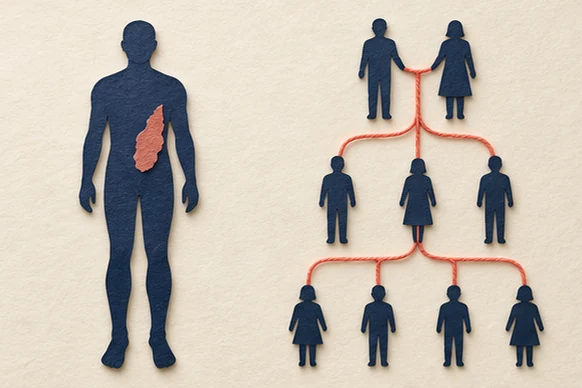
A laboratory can identify a DNA difference without knowing its clinical meaning. Reading the report well means separating detection, classification, personal risk and the limits of the test.
Resolving RNA profiles cell by cell can reveal populations hidden in tissue averages. It also introduces sampling, preparation and interpretation problems that a colorful cell map cannot solve.
The central difference is not whether an edit is powerful or permanent. It is which cells change, whether the change could be inherited and who bears the consequences.
RNA-seq samples molecules present in a specimen, then uses a laboratory and computational pipeline to estimate their abundance. It is not a direct meter of protein activity or a complete record of gene regulation.
Gene delivery is a chain of barriers, not a single targeting trick. Cargo must survive the trip, enter useful cells and reach the compartment where it can work.
A reference provides shared coordinates for comparing DNA. It is neither a biologically ideal genome nor a complete representation of human variation, which is why reference design affects what researchers can see.
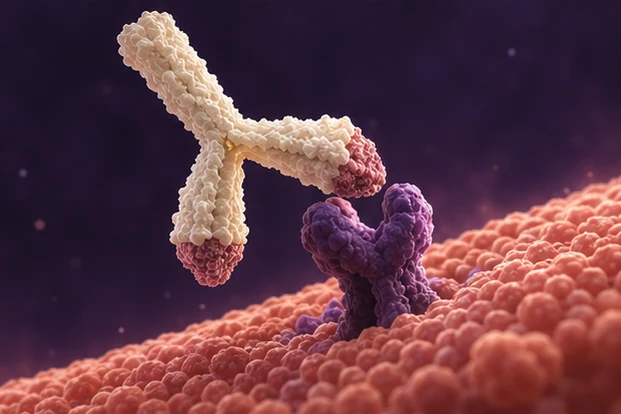
Binding a target is only the opening test. A therapeutic antibody must produce the right biological effect, reach the right place, and remain a reliable product through manufacture and use.
Medicines change which microbes survive and spread. Understanding resistance requires following both the biological mechanisms inside organisms and the routes that move resistant infections through communities.
Biological medicines can vary at a molecular level without differing meaningfully in treatment. Biosimilar development is built around proving that the differences do not undermine the reference product's established benefits and risks.
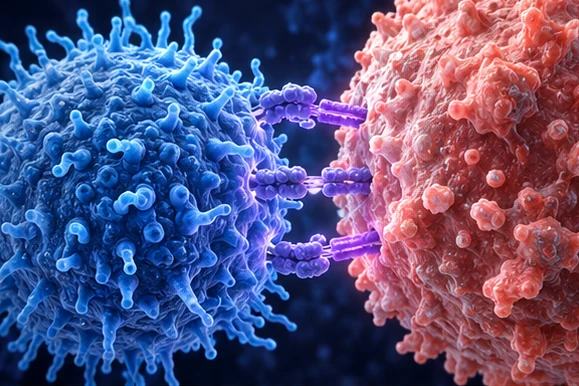
A redesigned receptor can turn a patient's immune cells into cancer hunters. Making that recognition useful requires controlling where the cells act, how strongly they respond, and what happens afterward.
A cell therapy factory must preserve biological behavior, not just produce a fixed chemical amount. The challenge stretches from starting material and culture conditions to testing, transport, and the patient's treatment schedule.
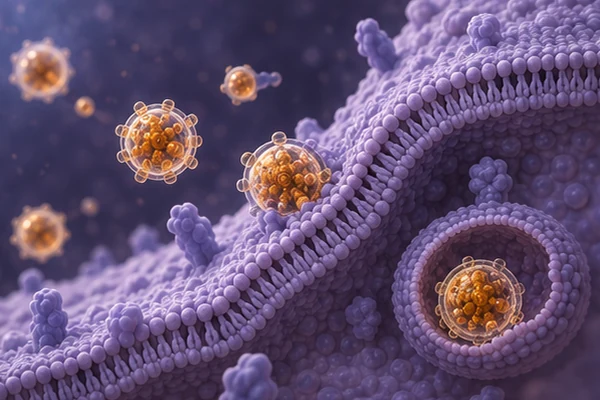
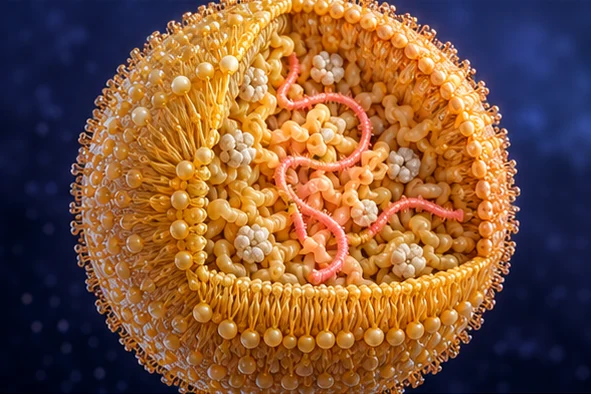
An RNA sequence cannot help a cell it never reaches. Lipid nanoparticles solve several delivery problems at once, while creating engineering and safety questions of their own.
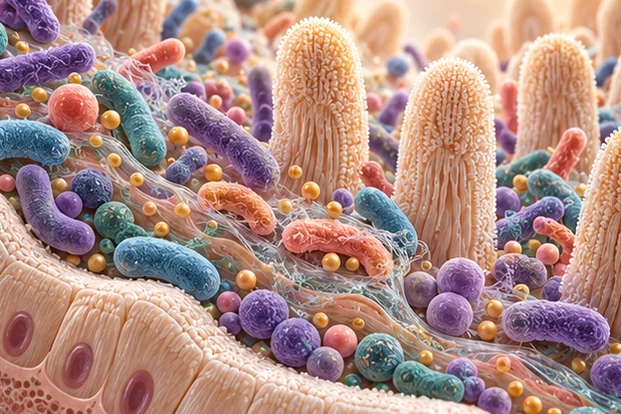
Finding different microbes in people with a disease is a starting point, not an explanation. Stronger evidence asks which organisms or molecules change a biological process, under what conditions, and with what consequences for patients.
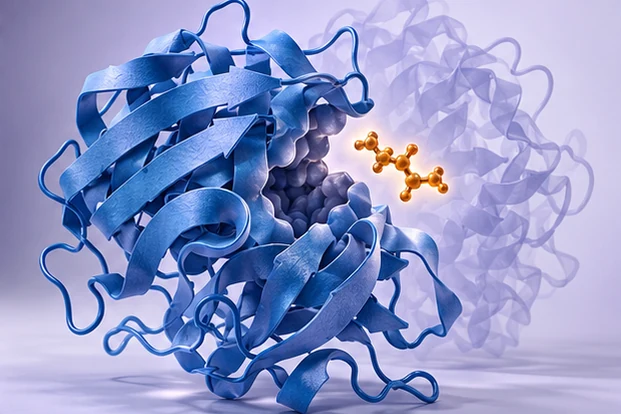
Three-dimensional structures reveal possibilities that a sequence alone can hide. They do not, by themselves, establish activity, explain a patient's variant, or prove that a drug will work.
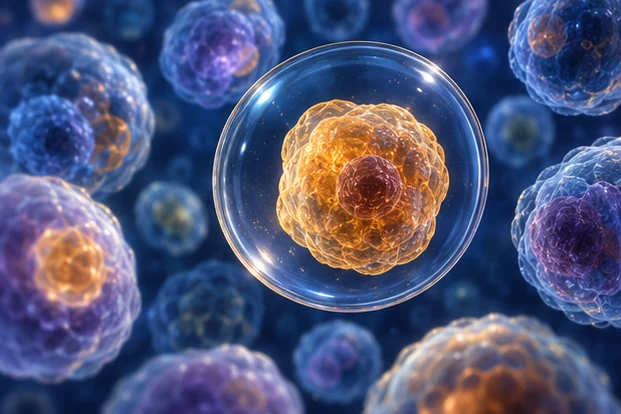
Stem cells can organize into three-dimensional tissues that reproduce selected features of organs. Their scientific value depends on knowing exactly which features they capture—and which they leave out.
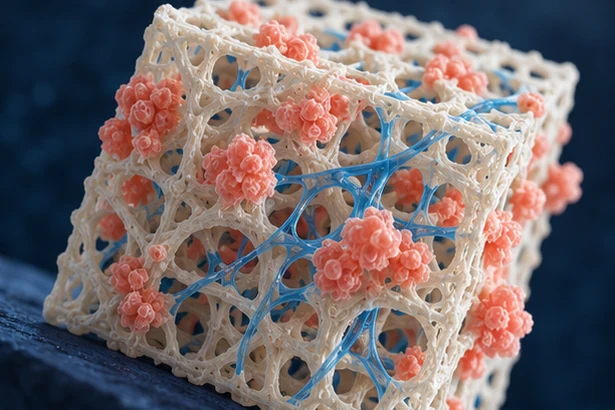
A scaffold can give cells somewhere to attach and organize, but a useful tissue also needs appropriate cells, biological signals, nourishment, and integration. Reproducing an organ's outline is not the same as rebuilding its function.
A percentage reduction needs a starting risk and a time horizon. Putting both treatment groups on the same scale reveals what a result could mean in practice.
Models can help researchers choose what to test next. Their strongest claims still need independent data, laboratory confirmation, and ultimately evidence in people.
Phase numbers describe development questions, not guaranteed levels of success. Understanding the purpose of each stage keeps promising findings in proportion.
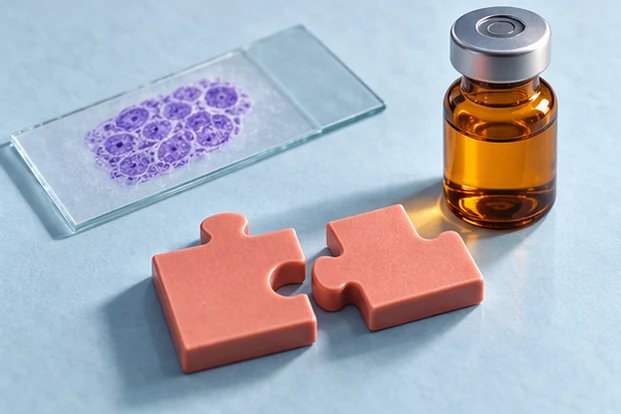
Some therapies depend on information from a specific diagnostic test. The match can improve treatment selection, but its reliability depends on the assay, the evidence, and the clinical setting.
Start with the question, comparison, and outcome—not the most exciting percentage. A disciplined reading separates a promising signal from dependable evidence.
A blood sample can carry valuable clues about cancer, but the meaning depends on what was measured and why. Easier sampling does not remove biological or clinical uncertainty.
Animal experiments can reveal mechanisms and justify further research. Translating their results requires solving both a reliability problem and a human-relevance problem.
A registry entry is a structured trail of plans, updates, and sometimes results. Read it as evidence about a study—not as an endorsement or a finished journal article.
A test’s accuracy numbers do not directly tell you whether a positive result means disease. The missing ingredient is how common the disease is in the people being tested.
A faster measurement can make research feasible, but changing a marker is not automatically the same as helping a patient. The strength of the bridge matters.