- Resistance belongs to microbes, not to a person's body becoming accustomed to antibiotics.
- Selection, inherited resistance traits, and gene sharing can change populations and spread resistance.
- Prevention, appropriate treatment, diagnostics, and equitable access all matter alongside new drug development.
The population changes under treatment
Antimicrobial resistance occurs when microbes can withstand medicines intended to control them. Antibiotic resistance is the bacterial part of a wider problem that also includes resistance to antifungals, antivirals, and antiparasitic medicines. The organism is resistant; the patient's body has not become immune to treatment. That distinction explains why a person can acquire a resistant infection even without previously taking the drug concerned. [1] [2]
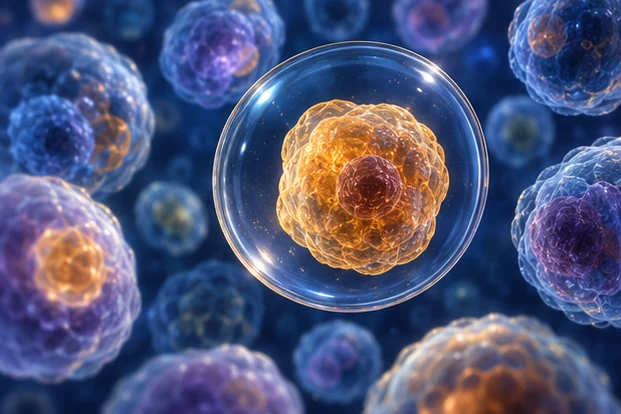
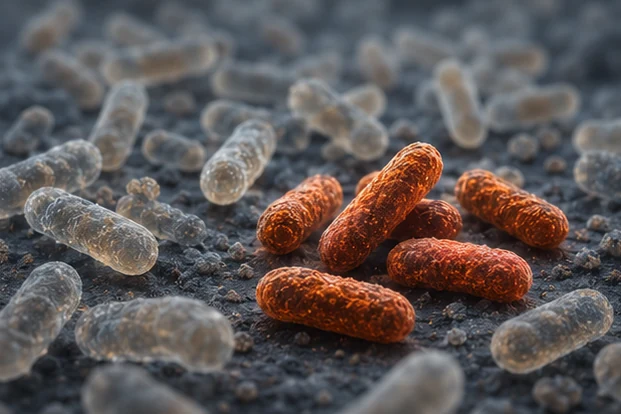
Treatment creates a selective environment. Microbes that are susceptible are inhibited or killed, while organisms carrying relevant resistance traits may survive and multiply. Over time, the population can contain a greater share of resistant organisms. This is evolution through differential survival and reproduction, not a deliberate decision by microbes to defeat medicine. The exposure changes which traits are advantageous; it does not imply that every exposed organism independently develops the same solution. [1]
Resistance can travel with cells or with genes
Resistance traits are encoded in microbial genetic material and can be passed on as organisms reproduce. Some resistance mechanisms can also move between microbes through shared genetic material. CDC emphasizes that resistant organisms can share resistance genes with organisms that have never encountered the relevant medicine. Inheritance through reproduction and gene transfer are different routes to the same practical problem: more microbes that a treatment may fail to control. [1] [3]
Imagine, hypothetically, a resistant bacterial strain spreading between patients in a care setting. The rise in resistant infections would not require resistance to evolve anew in every patient. Alternatively, a resistance gene could spread among different bacterial backgrounds. These scenarios would look different biologically even if a simple report counted both as additional resistant infections. Understanding transmission is therefore part of understanding resistance, not a separate issue after evolution has finished.
There is more than one way to evade a drug
CDC describes several mechanisms. Microbes can restrict entry, pump a drug out, chemically alter or destroy it, change the structure it targets, or use an alternative biological process. These mechanisms act at different points between drug exposure and biological effect. A medicine may be present outside a bacterium yet fail to reach an effective concentration at its target, or it may reach the cell and no longer bind effectively. [1]
For a concrete example, some Klebsiella pneumoniae produce carbapenemases, enzymes that break down carbapenem antibiotics and many related beta-lactam drugs. Other organisms use pumps that remove several classes of antimicrobial agents. Resistance is therefore not one molecular trick with one universal remedy. A drug-development strategy that addresses enzymatic breakdown might not solve poor entry, altered targets, or a combination of mechanisms in another organism. [1]
Useful treatment still creates ecological pressure
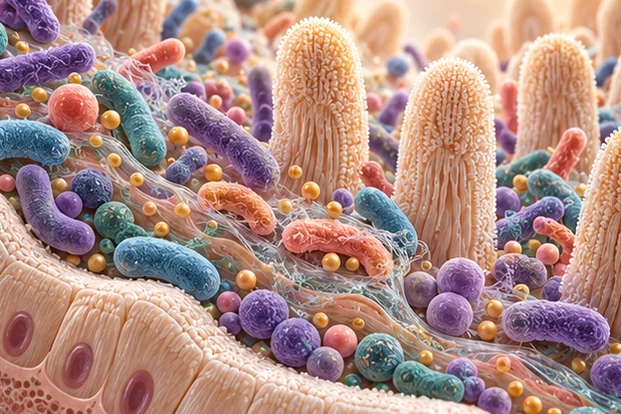
Antibiotics can be lifesaving and can also affect helpful bacteria as well as the organism causing an infection. CDC notes that any use of antibiotics or antifungals can contribute to resistance, while misuse and unnecessary exposure add avoidable pressure and harm. Stewardship is not a demand to withhold effective treatment. It is an effort to match treatment to the clinical need and use evidence to reduce avoidable exposure. [1] [3]
The opposite problem also matters. WHO identifies poor access to appropriate medicines, vaccines, and diagnostics as contributors to the crisis. People without timely, effective treatment can experience severe illness while infections continue to spread. A policy that reduces drug use indiscriminately can therefore miss the purpose of stewardship. The goal is appropriate access and appropriate use together, not the smallest possible prescription count regardless of patient outcomes. [2]
Preventing an infection prevents an evolutionary opportunity
Resistance spreads across connected settings: households, healthcare facilities, animals, food systems, and the environment. Travel and movement of goods can carry resistant organisms between regions. CDC describes infection prevention, vaccination, hygiene, and safe food preparation as ways to limit spread. These measures can reduce both infections and the need to treat them, affecting the number of opportunities for resistant organisms to gain an advantage. [3]
WHO frames this as a One Health problem linking human, animal, plant, and environmental health. The practical implication is that a new medicine alone cannot compensate for inadequate sanitation or weak infection control. Likewise, excellent prescribing in one institution cannot fully isolate it from organisms circulating elsewhere. Drug development, surveillance, prevention, and treatment access address different parts of a connected system and work best when considered together. [2]
Read the denominator before the alarm
A report of increasing resistance should identify the organism, the drug, the place, the time period, and the population sampled. The percentage resistant among laboratory-confirmed infections is not automatically the percentage of all infections or all people. A change in who gets tested can affect the observed pattern. Counts of infections, proportions resistant, and deaths associated with resistance answer different questions and should not be substituted for one another.
The same care applies to solutions. A new compound that inhibits a resistant isolate in a laboratory is an early achievement, not proof of an effective human treatment. A declining resistance proportion can be encouraging without establishing why it changed. The durable lesson is neither that evolution makes intervention hopeless nor that a new antibiotic permanently ends the problem. It is that every intervention operates within a living, changing population.
What this does not establish
Resistance varies by pathogen, drug, geography, and clinical setting. This article does not supply a treatment regimen, susceptibility interpretation, or a current numerical burden estimate. The cited public-health summaries support mechanisms and prevention principles but cannot determine the cause of an individual treatment failure. Choices about starting, changing, or stopping prescribed antimicrobials belong with the treating clinician and appropriate diagnostic evidence.
Sources & further reading
Source records for this public draft are listed below with their historical access dates. Source checking is not medical validation or completed human editorial review.
- About Antimicrobial Resistance ↗
Centers for Disease Control and Prevention · Accessed 2026-09-11
Resistance occurs in microbes; antimicrobial exposure selects survivors; resistance genes can spread; mechanisms include entry restriction, efflux, enzymatic destruction, target change, and pathway bypass.
- Antimicrobial resistance ↗
World Health Organization · Accessed 2026-09-11
Scope across microbial groups, misuse and access barriers, infection prevention, diagnostics, research needs, and the One Health framework.
- Antimicrobial Resistance: Causes and How It Spreads ↗
Centers for Disease Control and Prevention · Accessed 2026-09-11
Gene sharing and transmission, spread through healthcare and community settings, stewardship balanced with access, hygiene, vaccination, and prevention.
Educational information only. Not medical or financial advice. Do not change treatment or investment decisions based on this draft.