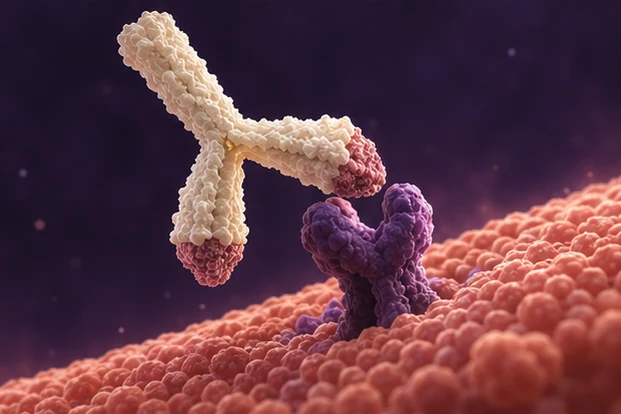
- AI can prioritize targets and molecules, but prediction is not proof of mechanism or patient benefit.
- Data leakage and mismatched validation can make performance look better than it will be in new experiments.
- The meaningful benchmark is a useful, reproducible improvement in a defined discovery decision.
Name the task before judging the intelligence
A model that predicts solubility answers a different question from one that selects a drug target. Judge each against the laboratory decision it is supposed to improve. Models can help rank biological targets, predict molecular properties, prioritize compounds for testing, or analyze experimental data. Machine learning uses patterns in training data to make predictions on new inputs. FDA describes AI applications across the drug product lifecycle, while a methodological primer emphasizes choosing a method that fits a specific development need and available data. [1][2]
That specificity is the first defense against hype. Predicting whether a compound is soluble is different from predicting whether it binds a protein, and both are different from predicting that it will improve a disease. An impressive result on one task should not silently become a claim that the entire route from discovery to effective treatment has been solved.
A high score is a hypothesis about biology
Imagine a hypothetical model that ranks a million candidate molecules and proposes twenty for laboratory testing. This can be valuable if it enriches the tested set for useful activity or reduces wasted experiments. But a score is not a measurement of what the molecule actually does. The compound still needs to be obtained, characterized, and tested in a suitable experimental system.
Even genuine binding to a protein does not establish a useful drug. Researchers must ask whether the compound changes the relevant function, reaches the right tissue at a feasible exposure, avoids unacceptable off-target effects, and remains sufficiently stable. The primer describes prediction tasks spanning properties such as solubility, permeability, pharmacokinetics, safety, and efficacy precisely because these are separate obstacles, not one interchangeable success metric. [2]
Design a test the training data cannot answer
A model trained on uneven or narrowly collected observations can learn those limitations along with the desired biology. Measurements from different laboratories may use different conditions, detection limits, or definitions of activity. Missing negative experiments can also distort the apparent universe of possible outcomes. More rows do not necessarily repair biased labels or make an unrepresentative dataset suitable for a new task.
Data leakage is an especially serious problem. Information from a test set, or information that would not exist at the time of prediction, can accidentally enter model development. The model then appears to predict knowledge it has partly already seen. The inspected primer discusses leakage through preprocessing before splitting data and through future information, and recommends a genuinely unseen validation dataset as a final check. [2]
If the goal is to predict behavior for genuinely new compounds, evaluation should challenge the model with examples meaningfully separated from its training experience. Merely shuffling closely related observations between training and testing can make the assignment easier than the real discovery problem. The relevant separation might involve chemical families, experimental batches, laboratories, or time, depending on what deployment actually requires.
A hypothetical model may outperform a baseline on archived measurements yet fail when asked to select compounds for a new assay. That does not necessarily make the model useless; it identifies a narrower domain of reliability. Report the target task, comparison method, held-out data design, errors, and uncertainty rather than a single accuracy score. FDA’s good-practice principles emphasize clear context of use, data governance, and risk-based performance assessment. [3]
Ask for the prospective selection record
A stronger test fixes the model and selection rule before collecting the decisive experimental outcomes. Researchers then test the proposed compounds and compare the results with an appropriate alternative selection strategy. This prospective structure reduces opportunities to choose flattering examples after results are known. It also reveals practical failures such as difficult synthesis or behavior that a historical benchmark did not capture.
Success should be measured against the intended improvement: more validated hits, better candidate properties, fewer experiments, or another defined outcome. The denominator matters. Showing one successful molecule without reporting how many were proposed, made, and tested can conceal a weak hit rate. Claims of faster discovery likewise need a specified start and endpoint and an accounting of the work that remains downstream.
A compound with reproducible activity still needs a development program. FDA’s description of preclinical research emphasizes dose and toxicity information before decisions about human testing. A model’s origin story does not change the need to establish exposure, safety, and meaningful effects in the relevant biological and clinical setting. [4]
The productive relationship is iterative: experiments generate evidence, models help select informative next steps, and new measurements reveal where the models were wrong. Human expertise remains important for choosing the question, recognizing unsuitable data, and deciding which errors are consequential. Governance and lifecycle management matter because a model can become less reliable as assays, inputs, or intended uses change. [3]
For an “AI-discovered” candidate, ask for the selection record: how many molecules were proposed, how many were made and tested, and what beat the comparison method? Without that denominator and a prospective comparison, a successful molecule cannot tell us whether the model improved discovery.
What this does not establish
This article evaluates general reasoning and validation principles rather than ranking platforms or measuring industry-wide productivity. The methodological primer is used for foundational validation concepts, not a current model leaderboard. No predicted or laboratory-active molecule discussed here is represented as an approved human treatment.
Sources & further reading
Source records for this public draft are listed below with their historical access dates. Source checking is not medical validation or completed human editorial review.
- Artificial Intelligence for Drug Development ↗
U.S. Food and Drug Administration · Accessed 2026-09-11
AI and machine learning definitions and applications across the drug development lifecycle; safety and effectiveness remain regulatory goals.
- Machine Learning in Drug Discovery and Development Part 1: A Primer ↗
CPT: Pharmacometrics & Systems Pharmacology, hosted by PubMed Central · Accessed 2026-09-11
Drug-discovery prediction tasks, data quality, model validation, leakage, and unseen validation data. Introductory and Data leakage sections inspected; not NIH policy.
- Guiding Principles of Good AI Practice in Drug Development ↗
U.S. Food and Drug Administration · Accessed 2026-09-11
Clear context of use, data governance, risk-based performance assessment, lifecycle management, and multidisciplinary expertise.
- Step 2: Preclinical Research ↗
U.S. Food and Drug Administration · Accessed 2026-09-11
In vitro and in vivo preclinical research; toxicity, dose information, and transition to human study.
Educational information only. Not medical or financial advice. Do not change treatment or investment decisions based on this draft.