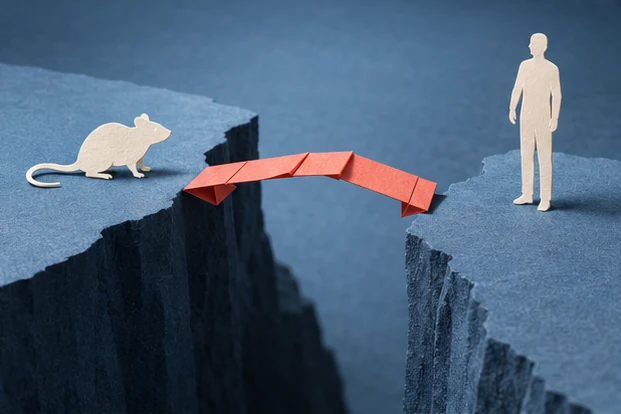
- Early trials primarily characterize dose, exposure, tolerability, and preliminary activity.
- Later comparative trials can strengthen evidence, but the actual design and endpoint matter more than the phase label.
- Approval and postapproval study do not mean that every safety question has been settled.
A phase is a question, not a medal
A press release can make entering phase 3 sound like finishing a race. In reality, it often means beginning another major test. Clinical development organizes uncertainty into stages: what dose can be used, whether an intervention shows useful activity, how it compares with alternatives, and what happens with broader or longer use. Moving forward means there is a rationale for more research, not that the next study’s answer is known. [1]
Phase labels also do not tell the whole design. A study may be randomized or nonrandomized, masked or open label, comparative or single arm. Its participants may have narrowly selected disease features. ClinicalTrials.gov separates phase from allocation, masking, arms, and outcome measures for a reason: these fields describe different aspects of the evidence. [3]
Before phase 1, a different kind of evidence
Preclinical research includes experiments outside living organisms and studies in living systems. These studies can investigate mechanism, dosing, and toxicity before a candidate is tested in people. FDA describes this stage as providing detailed information needed to decide whether human testing should proceed. It is a foundation for clinical investigation, not evidence that the treatment already works in humans. [2]
A drug may affect its target in a cell culture yet fail to reach that target safely in the body. An animal model may capture part of a disease while missing its full human biology. Beginning a clinical trial means the development program is moving into direct human observation, where important assumptions about exposure, safety, and response must be tested rather than inherited from the laboratory.
Phase 1 asks how the intervention behaves in people
Early human studies focus on safety, tolerability, dose, and how the intervention moves through or affects the body. Researchers may examine several doses and schedules, watching for toxicities and signs of biological activity. Depending on the treatment and disease, participants may be healthy volunteers or people with the condition. Cancer trials commonly involve patients rather than healthy participants. [1]
The phrase safe in phase 1 needs qualification. A small, selected group observed for a limited period cannot exclude rare or delayed harms. Nor does tolerating a dose prove that it offers a favorable benefit-risk balance. If an early trial reports tumor shrinkage, that observation can be important, but the absence of a suitable comparison and the small sample may limit conclusions about how much the treatment caused the outcome.
Phase 2 asks whether the signal is worth pursuing
Phase 2 usually expands the investigation of activity while continuing safety assessment and refining the treatment strategy. Researchers may select an endpoint that can be measured sooner than a final clinical outcome. In cancer, this might include whether tumors shrink or stop growing for a period. The purpose is often to decide whether the candidate warrants more definitive evaluation. [1]
Not every phase 2 trial is single arm, and not every positive signal deserves the same confidence. A randomized comparison can answer a different question from observing responses in treated participants alone. Consider a hypothetical report in which some patients improve: without knowing what would have happened under comparable care, improvement alone may not establish the size of a treatment effect. The design determines how much uncertainty remains.
Phase 3 tests a defined claim against a comparison
Later trials often compare the intervention with an appropriate alternative in a larger group. Randomization reduces selection bias, and a prespecified outcome provides a clear target for the analysis. The comparator might be standard treatment, or standard treatment plus a placebo when the experimental question concerns adding another intervention. A placebo label does not necessarily mean participants receive no effective care. [1]
Even here, inspect what the trial was designed to establish. Superiority asks whether one strategy is better on a specified outcome. Noninferiority asks whether it is not unacceptably worse by a prespecified margin. Merely finding no statistically significant difference does not establish equivalence. A phase 3 study can fail, remain inconclusive, or show a statistically convincing difference that is too small or too costly in side effects to be compelling.
Phase 4 continues the questions after approval
After approval, further studies can investigate longer-term safety, effectiveness, or use in broader populations. Larger exposure and longer observation may reveal issues that earlier trials could not reliably detect. The transition to clinical availability changes the setting; it does not make evidence collection unnecessary. NCI describes phase 4 as part of continued assessment after a treatment is approved. [1]
Real development programs are not always four neat boxes. Combined phase labels, overlapping activities, and disease-specific regulatory pathways can change the sequence. Devices and observational studies may not use drug phase categories at all. A missing phase label is therefore not, by itself, proof of poor science. [3]
The practical reading rule is to translate the phase into the question being answered, then inspect the methods. Ask what was learned, what remains unknown, and whether the reported conclusion goes beyond the study’s population and endpoint. A phase number tells you where to start reading; it should never tell you to stop.
What this does not establish
This overview describes common drug-development patterns, not mandatory sample sizes or a universal sequence. Oncology, rare diseases, vaccines, devices, and combined or adaptive trials can differ substantially. Phase labels do not establish a product’s current regulatory status or suitability for a particular patient.
Sources & further reading
Source records for this public draft are listed below with their historical access dates. Source checking is not medical validation or completed human editorial review.
- How Do Clinical Trials Work? ↗
National Cancer Institute · Accessed 2026-09-11
Eligibility, trial phases, randomized allocation, comparators, and continuing safety assessment.
- Step 2: Preclinical Research ↗
U.S. Food and Drug Administration · Accessed 2026-09-11
In vitro and in vivo preclinical research; toxicity, dose information, and transition to human study.
- How to Read a Study Record ↗
ClinicalTrials.gov, National Library of Medicine · Accessed 2026-09-11
Record identity, design, eligibility, outcomes, administrative dates, and version history. Substantive guide inspected using browser text after web_fetch returned only a shell.
Educational information only. Not medical or financial advice. Do not change treatment or investment decisions based on this draft.